

Retaining walls are among the most popular features of a property, not only enhancing its aesthetic appeal but also protecting your landscape, foundation, and outdoor living spaces from erosion. That is why proper care of retaining walls is essential for Dallas-Fort Worth (DFW) residents.
In fact, there are certain warning signs associated with a failing DFW wall that homeowners should never ignore, as it helps them initiate remedial measures well in time. At Landscape Express, our professionals with years of experience will share details on the warning signs and ways to strengthen your wall.
3 Warning Signs of Failing Retaining Walls
Cracks and Bulging
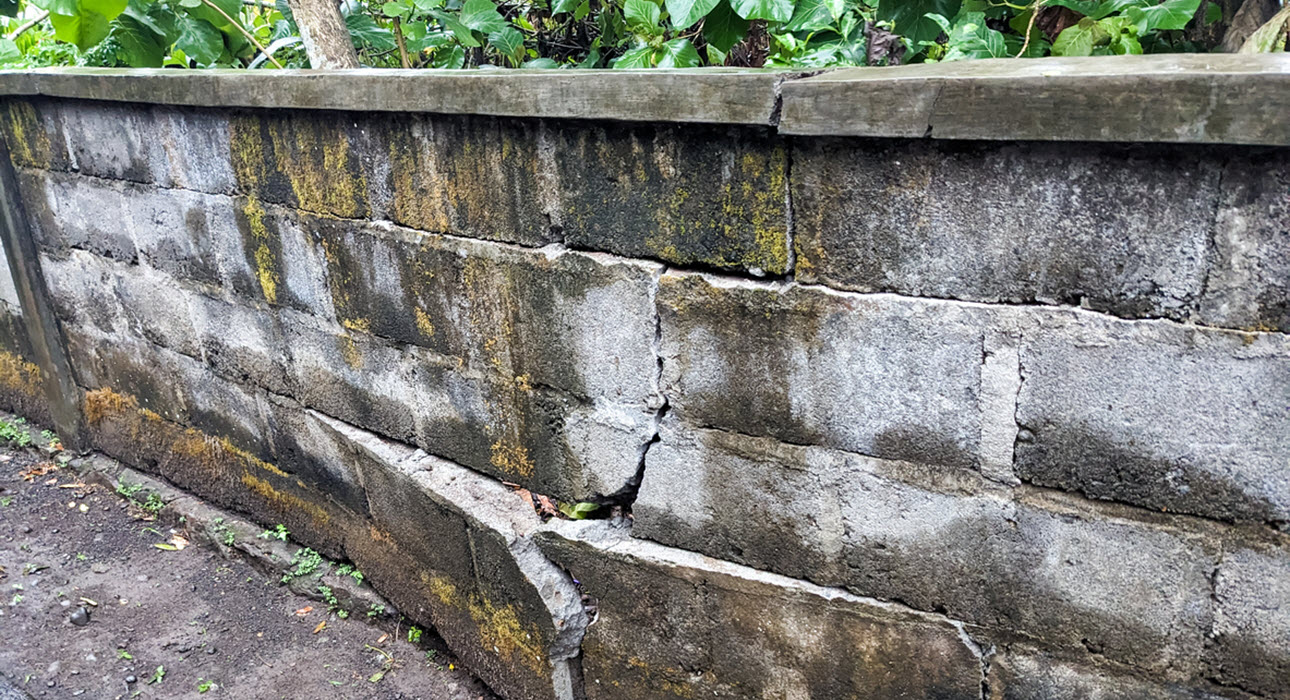
One of the easiest signs of failing retaining walls is the presence of bulges on the wall’s face and horizontal or vertical cracks on its surface. In fact, the cracks and bulges are very easy to identify and mostly occur due to excess stress in the walls.
In addition, the expansive clay soil in DFW is highly dynamic, swelling with moisture after heavy rains and contracting during the dry season, which can affect the structural integrity of your retaining walls. The excess force to which retaining walls are subjected during soil expansion and contraction can lead to cracks and bulges.
Moreover, if you have improper drainage behind the retaining walls, the problem will get worse as water is trapped, which increases bulging and leaning. This will also affect the wall’s ability to hold back soil, and ultimately, your retaining wall will collapse.
Water Pooling and Drainage Problem
Another leading sign of failing retaining walls is water pooling at the base of the wall, seeping through the wall’s surface, or erosion near the wall. That is why you will hear many experts say that proper drainage is very important for making retaining walls stronger.
In fact, most of the time, improper drainage causes water to accumulate behind the wall, increasing hydrostatic pressure, which eventually leads to bulging, cracking, and complete failure of your retaining walls.
If you come across pools of water at the base of the wall, white, powdery mineral deposits on wall surfaces, or dark, damp areas on the wall, these are signs that moisture is getting trapped in the walls. Furthermore, the expansive clay soil of DFW makes it difficult for property owners, as it is highly effective at retaining water for extended periods.
Soil Movement
The Dallas-Fort Worth soil is very porous and also shifts occasionally due to changes in climatic conditions. In fact, due to the shifting of the soil, you will come across gaps forming between the wall and the soil. In addition, you will see soil eroding at the top or base of your wall, along with soil slumping, both of which are major causes of retaining wall failure. At times, soil shifting can pull the walls away or wash away structures, leaving your property exposed. In fact, there are instances where the retaining walls collapse instantly as the soil supporting them erodes or slips away.
Ways to Strengthen Your Retaining Wall
There are several ways Dallas-Fort Worth residents can strengthen their retaining walls. In fact, steps must be initiated early on to make your retaining walls stronger. You must prioritize using the right materials for your retaining walls.
In addition to that, you must keep adequate channels for drainage so that water doesn’t accumulate in the wall. Moreover, you should pay attention to the excavation and compactness of the soil so that the foundation of your retaining walls is strong.
Landscape Express: Go-To Retaining Wall Contractors in DFW
At Landscape Express, we are  the most popular landscape company, offering a range of landscaping services from retaining wall construction to landscape design and professional gardening. Everything can be handled by our professionals.
If you are considering strengthening your retaining walls, get in touch with us, and we will take care of them.