

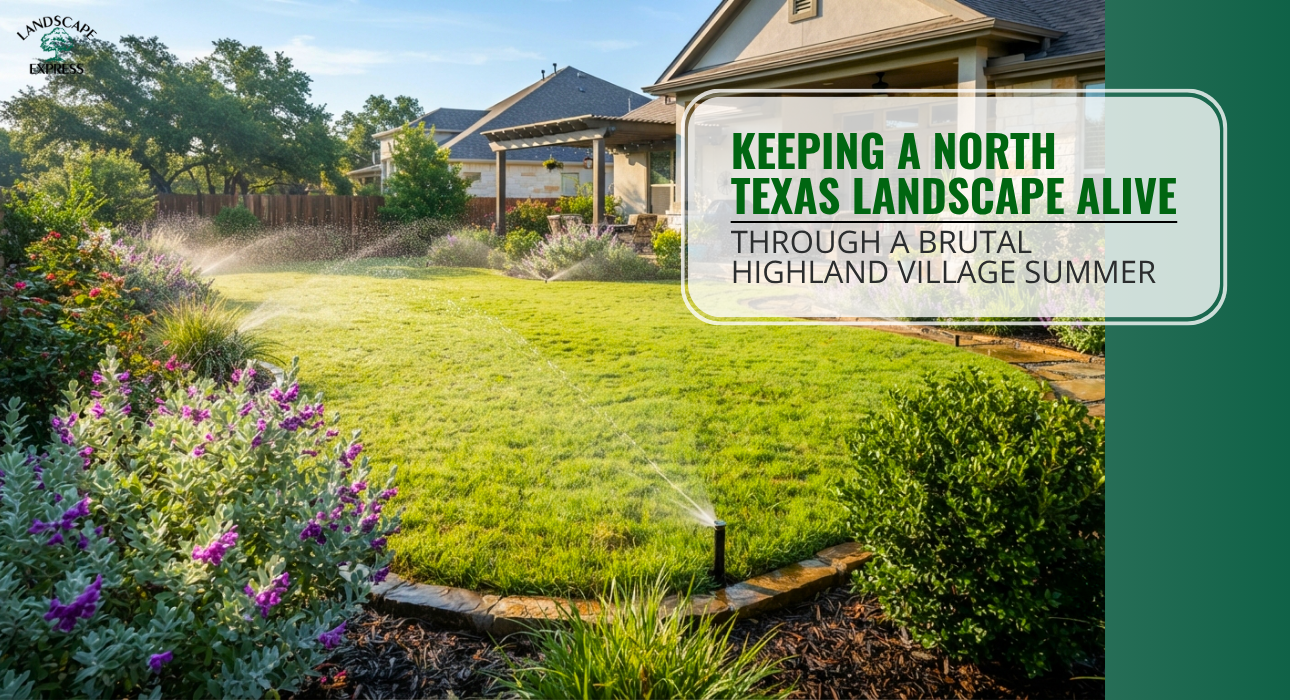
North Texas summer doesn’t ease in. It slams down. By July, Highland Village yards face weeks of triple-digit afternoons, cracked clay soil, and watering restrictions that leave lawns crisping at the edges. Your grass browns in patches, the foundation shrubs wilt by noon, and the crepe myrtles look thirsty before lunch. A landscape can absolutely survive a Denton County summer, but it takes the right watering, the right plants, and a little discipline about all three. Here’s what actually keeps a yard green from Copper Canyon to Flower Mound when the heat refuses to quit, and where most homeowners quietly lose the fight.
Quick Summary: Key Takeaways
- Water deep and early: About an inch of water two or three mornings a week beats a shallow daily sprinkle that evaporates by 10 a.m.
- Clay is the hidden enemy: Highland Village’s blackland clay cracks in the heat and pulls moisture straight past shallow roots.
- Pick tough plants: Native and adapted species like Texas sage and yaupon holly shrug off a Denton County August.
- Fix the sprinklers: A well-zoned system with a smart controller waters roots instead of the driveway.
- Summer sets spring: A yard stressed now comes back thin and weedy, so protect it through the worst weeks.
Deep, Early Watering Beats Daily Sprinkling Every Time
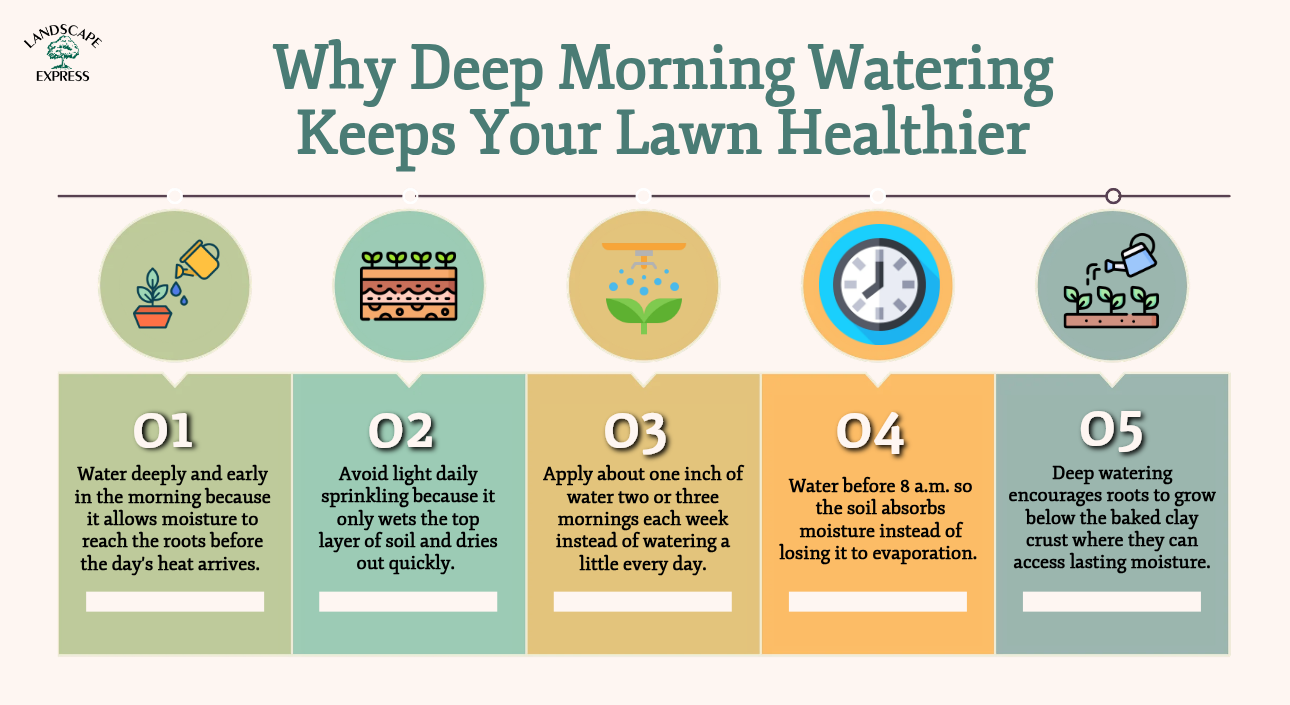
Water deep and early, not often and shallow. Shallow is the trap. A quick daily sprinkle wets only the top inch and burns off by mid-morning, training roots to crowd the surface where the heat cooks them fastest. Run each zone longer and less often instead, about an inch of water two or three mornings a week and always before 8 a.m., so it soaks past the baked clay crust down to where the roots actually live.
Timing is everything here. The EPA reports residential landscape irrigation runs nearly 8 billion gallons a day nationwide, and the average household pours more water outside than it uses for showering and laundry combined.
North Texas Clay Is the Enemy You Can’t See
The soil under your yard fights you all summer long. It’s the part nobody sees. Highland Village sits on heavy blackland clay that swells when wet and shrinks into deep cracks when it dries, and those cracks funnel water straight down past shallow roots while stressing the slab your house sits on. The same shrink-and-swell that browns a lawn can crack a foundation.
Cover the soil. We fix the problem with proper grading, mulched beds that hold moisture, and drip lines that feed roots slowly instead of running off hard-baked ground, and two inches of mulch alone can cut evaporation dramatically.
The Right Plants Shrug Off a Texas August
Native and adapted plants are the whole difference between a yard that coasts and one you’re forever rescuing. Thirsty imports fail fast in Denton County heat, while tough performers like Texas sage, lantana, yaupon holly, and native grasses barely register a 105-degree afternoon. We design beds around plants that match our sun, our soil, and our water reality, then group them by water need so the drought-tough ones aren’t drowned beside the few thirsty showpieces.
Right plant, right spot. Pick wrong and you water forever. That one rule saves more summer landscapes than any gadget on the shelf.
A Smart Irrigation System Saves the Yard and the Water Bill
An efficient sprinkler system is the cheapest insurance a summer lawn has. Old clock timers water on a fixed schedule whether it rained overnight or not, dumping money onto the sidewalk, while a properly zoned system with a smart controller and pressure-checked heads puts water only where roots need it. We audit each zone for coverage, fix the heads spraying the fence, and set run times around Highland Village’s watering-day rules.
Every head, checked. Roughly half the water most systems use never reaches a single plant, and chasing down that waste, head by head and zone by zone, is where a real irrigation audit quietly pays for itself across a long Texas summer.
Summer Stress Now Decides How the Yard Looks Next Spring
What you do in July shows up next March. A lawn that limps through summer on shallow roots and scorched crowns comes back thin, patchy, and full of weeds, while one watered deep and mowed high goes dormant gracefully and greens up fast when the heat finally breaks. We raise mowing heights in summer so taller blades shade their own roots, and we hold off on heavy fertilizer until the worst is over.
Summer sets spring. The yard keeps score. Skip the stress management now and you’ll pay for it in reseeding and replacements come next season.
Frequently Asked Questions
Q: How often should I water my lawn during a North Texas summer?
A: Aim for about an inch of water two to three times a week, early in the morning, rather than a little every single day. Deep, infrequent watering pushes roots down where they survive the heat, while daily sprinkling keeps them shallow and fragile. Always check your current Highland Village watering-day restrictions first.
Q: Why does my grass turn brown even though I water it?
A: Usually the water isn’t reaching the roots. On North Texas clay, quick watering runs off or evaporates before it soaks in, and shallow roots fry in the heat. Broken or misaimed sprinkler heads, compacted soil, and mowing too short all make it worse. A zone-by-zone irrigation check usually finds the real culprit.
Q: What are the best low-water plants for a Highland Village yard?
A: Native and adapted species handle our heat and clay best, including Texas sage, lantana, yaupon holly, Mexican feather grass, and similar tough performers. Grouping plants by water need and mulching the beds heavily stretches every drop. We design landscapes around what actually thrives in Denton County, not what looks good for one spring.
Q: Is it worth upgrading my sprinkler system before summer?
A: For most yards, yes. An efficient, well-zoned system with a smart controller waters only where and when it’s needed, which protects the lawn and trims the bill through peak-heat months. Since as much as half of irrigation water is commonly lost to runoff and evaporation, fixing coverage and timing pays for itself quickly.
Keep Your Highland Village Landscape Green All Summer
Fighting to keep the yard alive in this heat? Let’s get your watering, beds, and irrigation dialed in before August turns everything brown.